Everyone wants better outcomes. The trouble is getting there together.

A few reflections from Te Hui Taituarā 2026
My key impression from Taituarā was not conflict, it's pressure. Local government leaders seemed stoic, pragmatic and mildly cynical, with a noticeable tendency to cluster more closely with peers who understood the environment they were operating in. Taituarā’s own reflections on the conference echoed themes of change, resilience, connection and collaboration.
The interesting question is not whether central and local government want good outcomes. It is how they get there together when they have different jobs, pressures and vantage points.
There was a particular mood at Taituarā this year. Not panic, and certainly not revolt. It felt more like professional stoicism with a light dusting of cynicism: keep calm, carry on, and add the latest reform to the pile.
I also noticed senior leaders spending more time together than I remember from previous years. They seemed slightly less accessible and a little more inclined to stay close to people dealing with the same pressures. That may simply be a rational response to a noisier environment. Taituarā itself created dedicated forums for chief executives and other leaders to discuss the shifts affecting the sector, including those driven by central government, in a confidential peer setting.
When the environment gets complicated, attention becomes a scarce resource.
There is an easy story to tell about the relationship between central and local government: two sides, different agendas, occasional irritation. I am not sure that framing gets us very far.
A better metaphor may be architect and builder. The architect can draw a perfectly sensible line on a plan. The builder may discover that the ground slopes, the pipe is in the wrong place and there is a large pōhutukawa exactly where the line is supposed to go. Neither party is necessarily wrong. They are simply looking at the same problem from different places.
That feels relevant to the relationship between central and local government. National policy is necessarily designed at scale. Local government experiences it in actual places, with actual communities, existing infrastructure, finite capacity and local consequences.
Taituarā captured this neatly in its post-conference reflection, quoting economist Shamubeel Eaqub: “What happens nationally doesn’t happen everywhere equally.” It also noted that “nationhood is not experienced in the ether, it’s experienced locally.”
That seems worth remembering.
We saw a smaller version of the same issue in our own Champagne promotion. We asked delegates one simple question: What would make performance reporting easier in your organisation?
The answers were mostly practical. People talked about a “one simple integrated solution”, “systems which talk to each other”, a “consistent approach”, “good visuals”, and one line that I thought summed up the whole issue rather well: “Ask once, use many times.”
Nobody asked for more reporting. Nobody asked for another layer of governance. Nobody asked for a heroic new spreadsheet.
What people wanted was for the work to join up better.
That distinction matters. When information, processes and responsibilities do not line up neatly, people compensate. They copy, paste, chase, reconcile and build workarounds. Eventually someone produces a file called something like FINAL_Performance_Report_v7_REALLYFINAL.xlsx, everyone breathes a sigh of relief, and the organisation survives another quarter.
This is not necessarily a failure of people. It is often a failure of fit.
Capable people are very good at making poor processes look functional. They know who to call, which spreadsheet is current, where the reliable number lives and which workaround gets things over the line. That adaptability is admirable, but it can also hide the true cost of friction. The organisation still functions, so the underlying problem remains easy to ignore.
And that may be one of the more expensive features of organisational life: friction rarely appears as a line item. It appears as busy people.
That is why the conversation about public-sector performance should probably move beyond simply asking for more evidence, more reporting or more resilience. Sometimes the better question is: what can we stop making people compensate for?
At a national level, that may mean improving the way policy and implementation connect. Inside councils, it may mean improving the connection between strategy, delivery and reporting. In both cases, the difficulty often appears in the joins.
The challenge is not necessarily that people want different things. It is that the hand-offs, expectations and information flows between parts of the system do not always fit together cleanly.
That is also where the biggest gains may be hiding. Not in another grand transformation, but in reducing unnecessary friction: simpler processes, better-connected systems, clearer visibility, and information captured once and reused rather than repeatedly reconstructed.
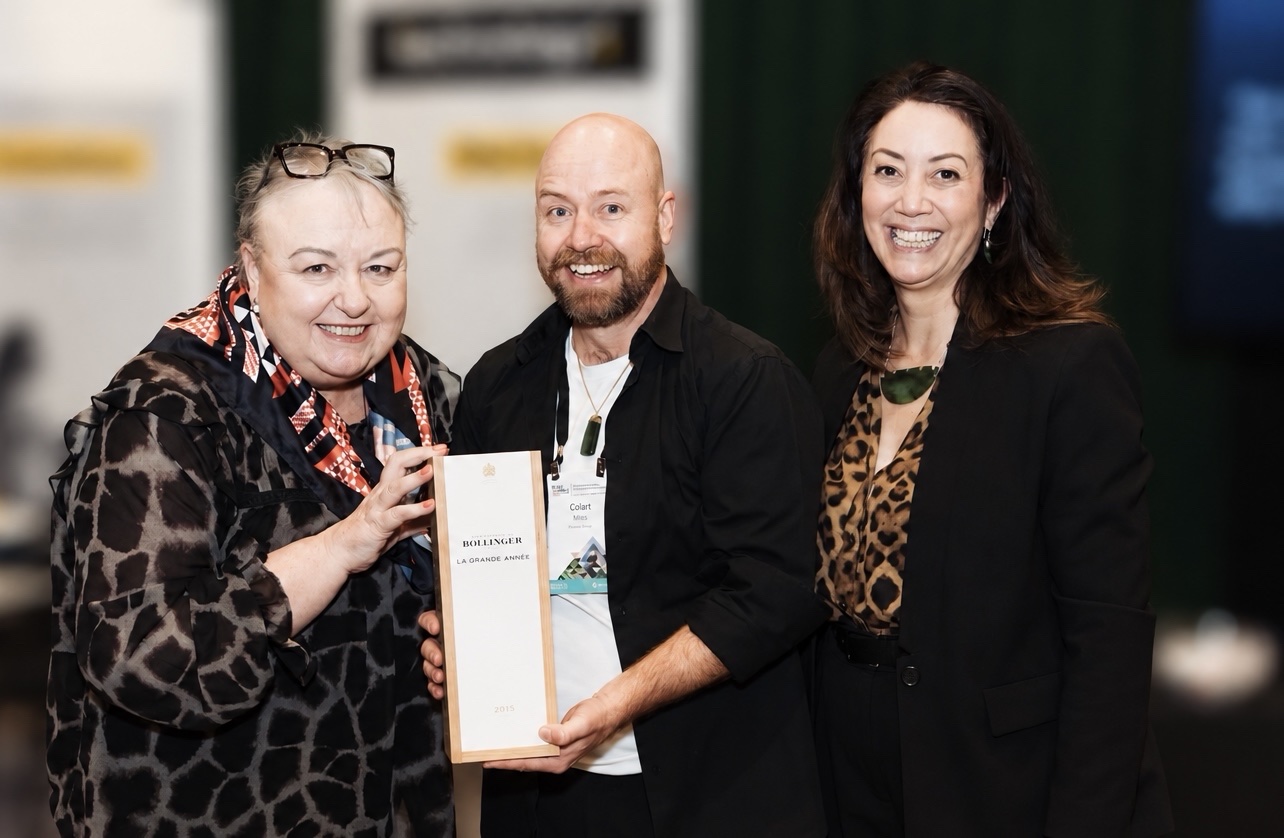
A special mention should go to Jo Miller from Hutt City Council, who won our Champagne draw and also supplied one of the best lines for our survey: “Ask once, use many times.”
There is quite a lot of public-sector wisdom packed into those five words.
Jo also raised another useful question: Hutt City already uses OPAL3, but are they getting the best from it? That is a fair question for any organisation to ask of any system it already owns.
The Champagne has now reached Hutt City. We understand deployment was successful.
Taituarā’s own post-conference reflection concluded that the sector cannot navigate what is ahead alone, and emphasised connection, collaboration and shared responsibility.
That felt true in the room.
My own reflection is:
Everyone wants better outcomes. The trouble is getting there together.
And getting there together probably requires more than goodwill. It requires understanding the other party’s vantage point, designing policy with implementation in mind, making strategy visible in delivery, and making reporting simpler rather than merely more comprehensive.
At Praxxis Group, that is the part of the conversation we are interested in. If you are wrestling with how to make performance clearer, reporting simpler, or the links between strategy and delivery easier to see, we would genuinely like to compare notes.
And finally, thank you to Taituarā for hosting us in Ngāmotu New Plymouth and for creating the kind of event where these conversations could happen.
We came back with new relationships, better questions and one fewer bottle of Champagne.
That seems a decent outcome.